HIPE, ICD-10-AM & DRG Revenue Recovery
Compares abnormal blood tests and vitals against diagnosis lists to flag missed HIPE / ICD-10-AM conditions with clear lab evidence so hospitals recover earned funding.
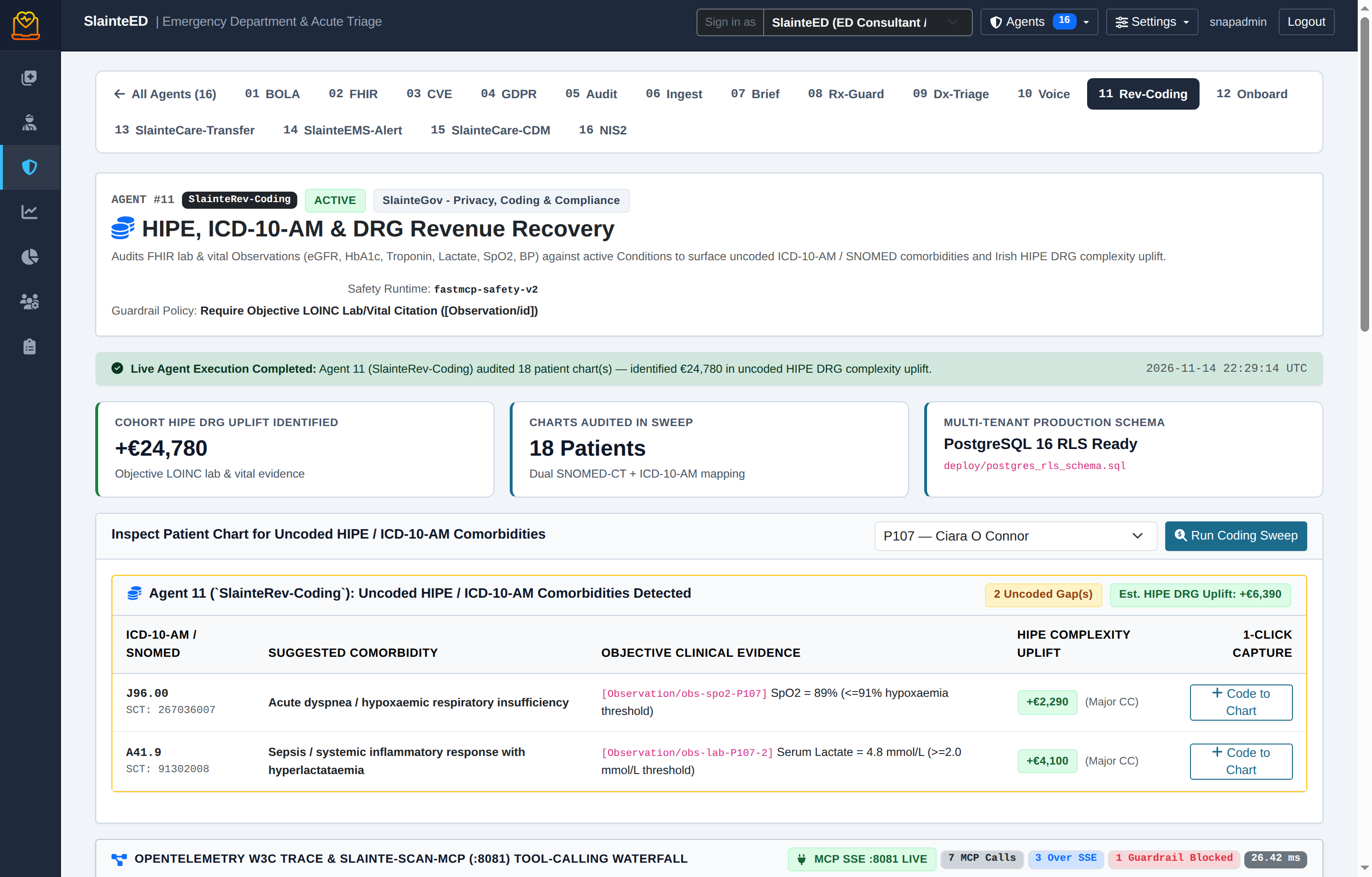
Inside SlainteDash: Live HIPE, ICD-10-AM & DRG Revenue Recovery View
Real software capture from SlainteDash showing live checks, patient safety alerts, and signed audit logs.
Three Ways SlainteRev-Coding Protects Your Patients & Organization
Every safeguard runs automatically behind your clinical workflows using verified rules and clear audit trails.
Lab-Proven Diagnosis Gap Check
Matches clear clinical lab thresholds (kidney eGFR < 60, HbA1c >= 48, elevated Troponin or Lactate) against missing diagnosis codes.
Transparent CFO Reimbursement ROI
Estimates missed HIPE DRG complexity value clearly for hospital finance teams before discharge billing closes.
One-Click Clinician Coding Capture
Applies approved dual diagnosis codes linked directly to the supporting blood test or vital record.
Capturing Missed Secondary Diagnoses Backed by Blood Test Proof
When a patient chart shows repeated low eGFR (38) and raised HbA1c (56) without Stage 3 Kidney Disease or Type 2 Diabetes on the problem list, SlainteRev-Coding surfaces the exact lab proof for sign-off.
SEE THIS CARE SETTING LIVE
Explore how SlainteRev-Coding fits directly into General Practitioners & Primary Care across desktop and mobile tablets.
For General Practitioners & Primary CareTechnical Architecture & Standards Mapping
Exact mechanisms, HL7 FHIR R4 bindings, and statutory standards verified for SlainteRev-Coding.
| Control Area | How It Works Under the Hood | HL7 FHIR R4 / Endpoint Binding | Regulatory / Clinical Standard |
|---|---|---|---|
| Evidence Ruleset | Deterministic LOINC threshold scanner (scan_patient_coding_gaps) | Observation (33914-3 eGFR, 4548-4 HbA1c, 6598-7 Troponin, 2524-7 Lactate) vs. Condition | Irish HPO HIPE & ICD-10-AM / ACHI Standards |
| Dual Coding Output | Creates Condition with simultaneous http://snomed.info/sct & ICD-10-AM codings | POST /enterprise/coding/apply/<patient_id> | HIQA SNOMED-CT National Release & ABF Audit |
| Anti-Fraud Guardrail | Never proposes a diagnosis code without a verifiable abnormal LOINC Observation | Condition.note citing [Observation/id] value & timestamp | Hospital Billing Audit Defensibility |
SlainteRev-Coding Technical & Integration FAQ
Architecture, standards, API integration, and safety details for IT and governance leads reviewing HIPE, ICD-10-AM & DRG Revenue Recovery.
How does SlainteRev-Coding execute under the hood without guessing?
Which HL7 FHIR R4 resources and endpoints does SlainteRev-Coding bind to?
Which compliance and clinical standards does SlainteRev-Coding help satisfy?
How fast can our hospital or clinic deploy SlainteRev-Coding in a pilot?
See All 15 Other SlainteTech Modules
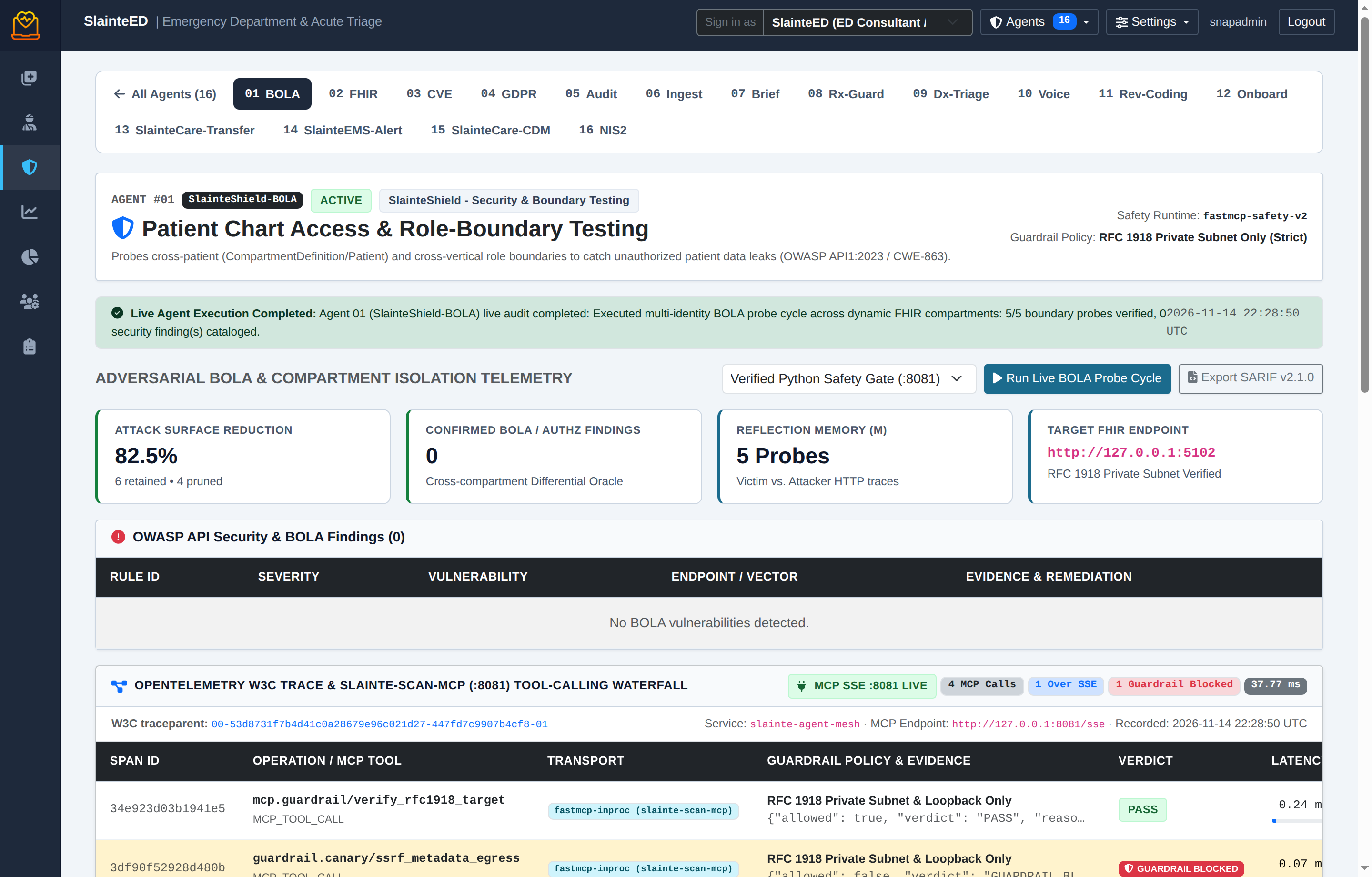
Patient Chart Access & Role-Boundary Testing
Continuously tests every patient record endpoint to prove unauthorized staff or outside accounts can never view someone else’s medical chart by changing a record ID.
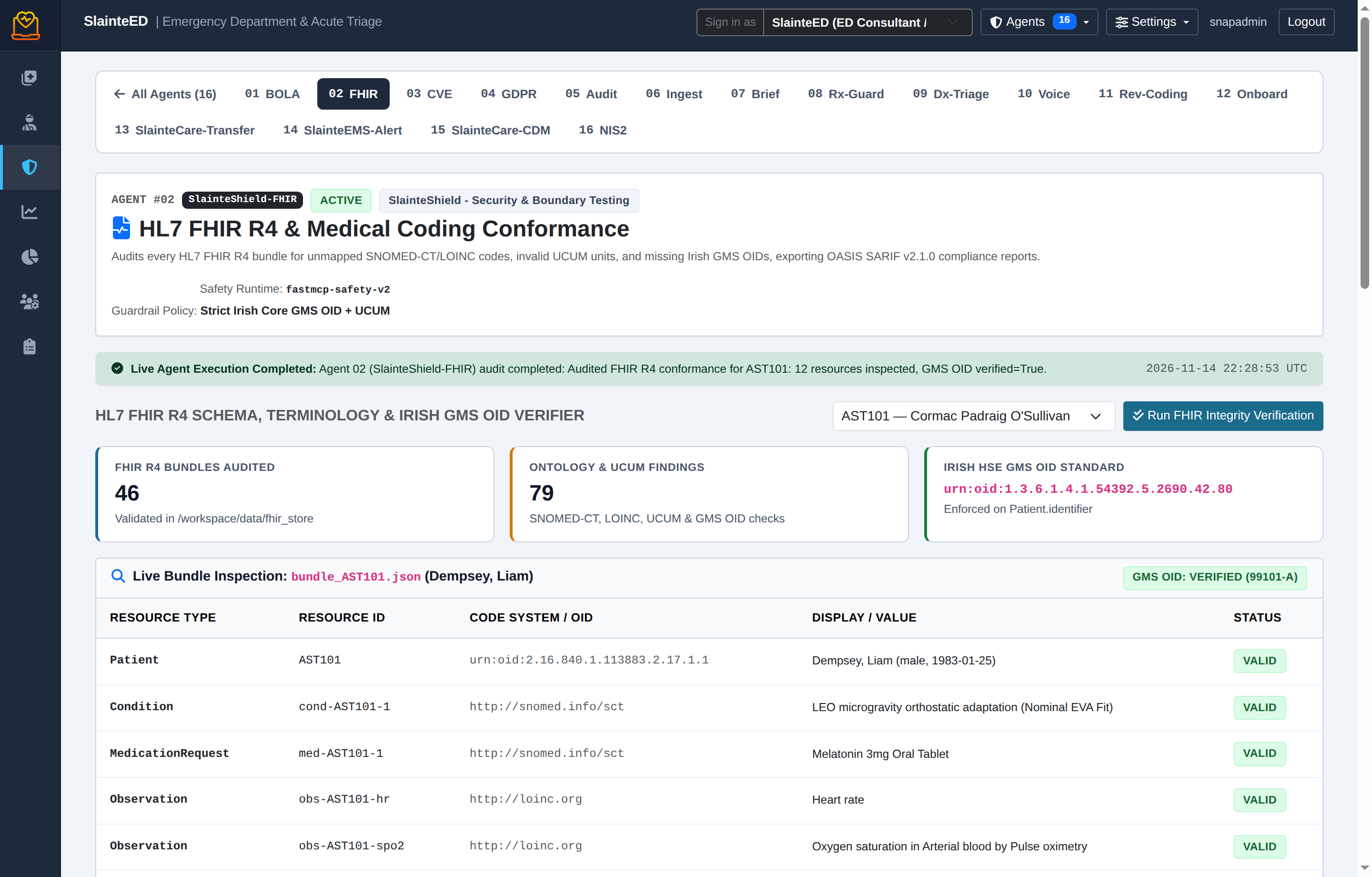
HL7 FHIR R4 & Medical Coding Conformance
Catches missing diagnosis codes, sloppy medication dose units, and broken patient IDs before prescriptions reach pharmacies or records move between clinics.
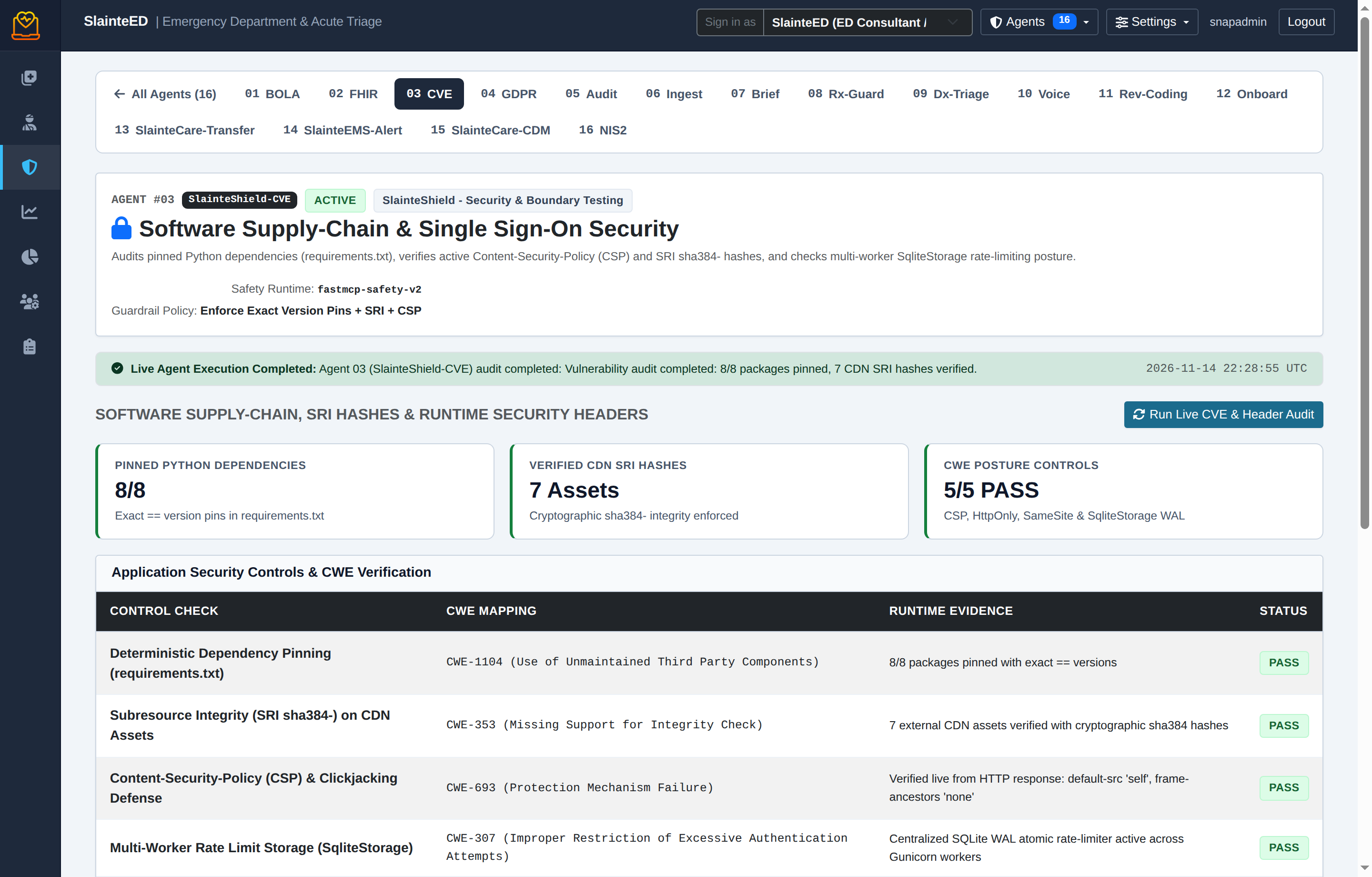
Software Supply-Chain & Single Sign-On Security
Protects clinic and hospital deployments from hidden software tampering, outdated third-party packages, browser script risks, and repeated password guessing.
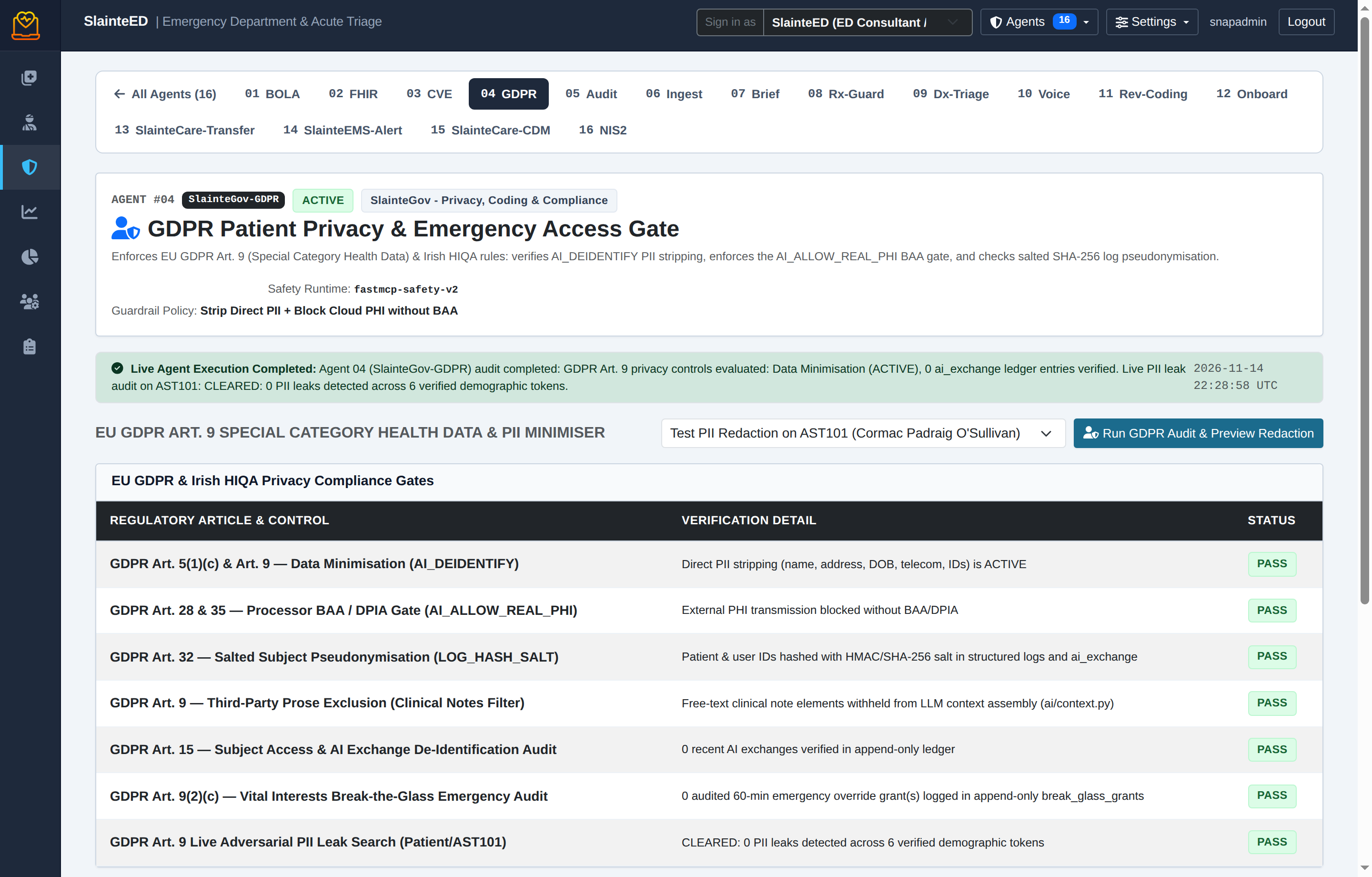
GDPR Patient Privacy & Emergency Access Gate
Keeps patient names, addresses, and phone numbers out of logs and outside summaries, while giving clinicians an audited 60-minute emergency override when lives are at risk.
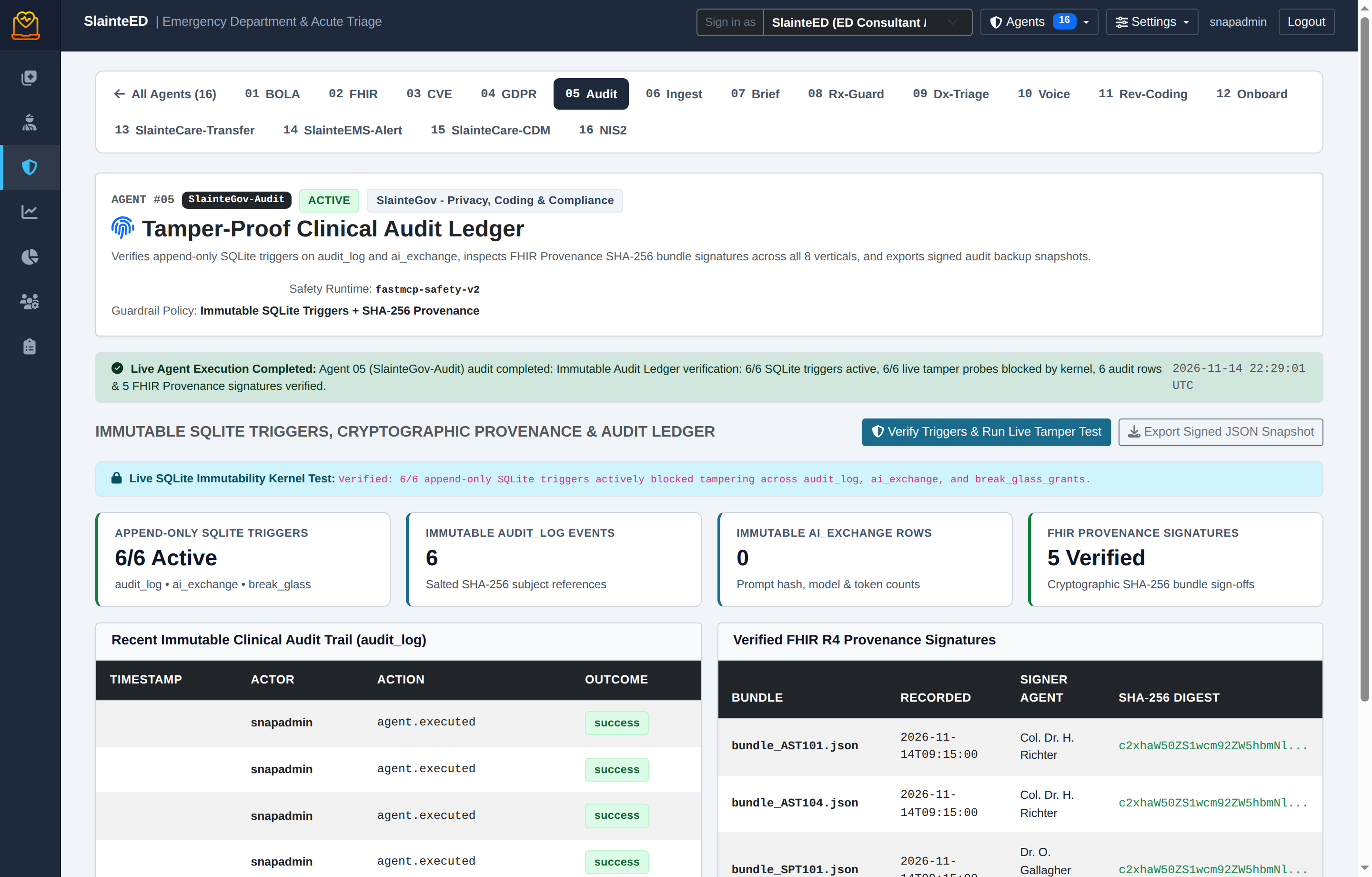
Tamper-Proof Clinical Audit Ledger
Locks every triage score, prescribing override, and clinical sign-off into an unchangeable audit log that proves who approved every decision and exports board-ready certificates.
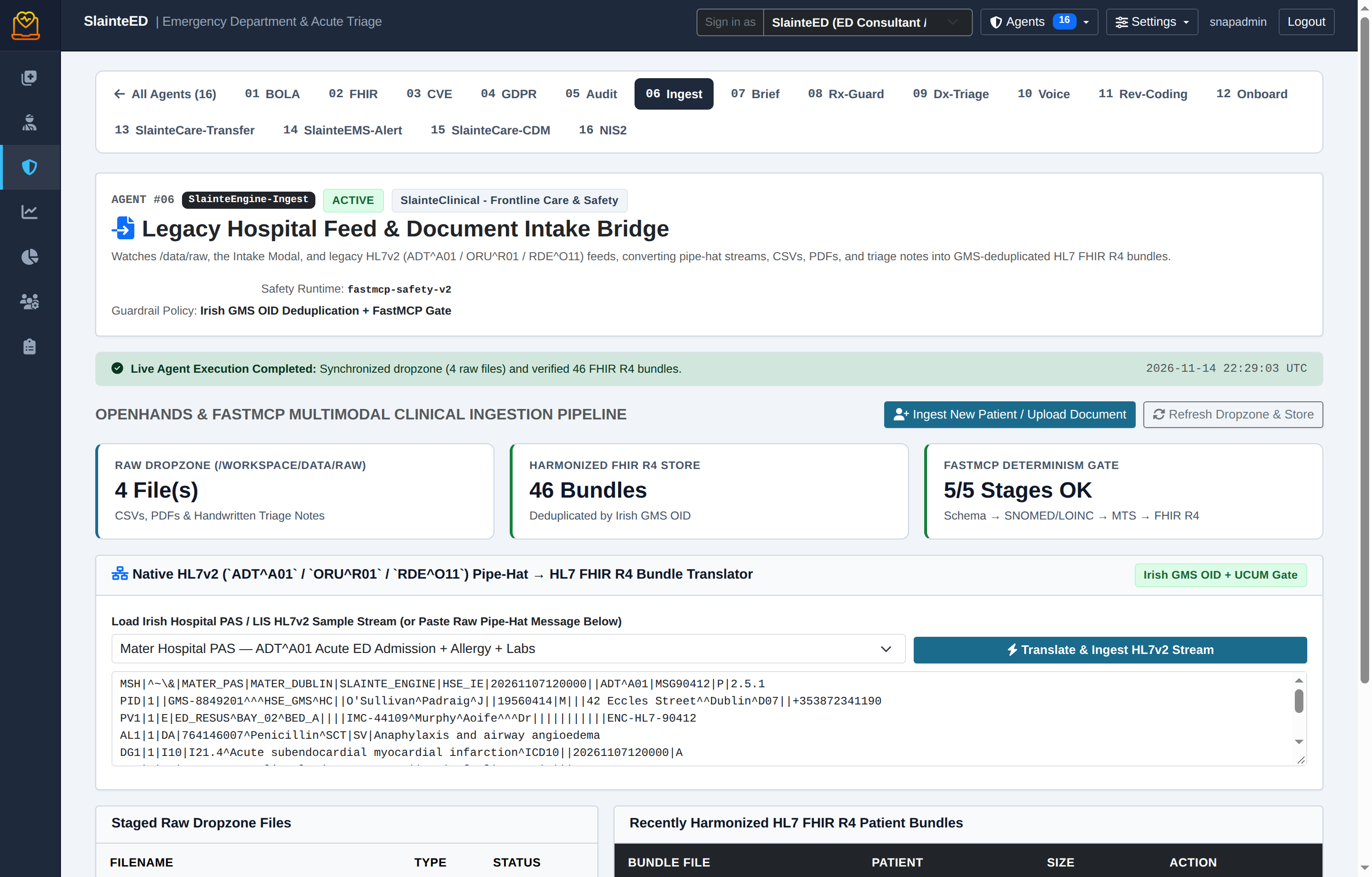
Legacy Hospital Feed & Document Intake Bridge
Brings older hospital HL7v2 feeds, clinic spreadsheets, referral letters, and handwritten triage notes cleanly into one patient record without duplicate patient files.
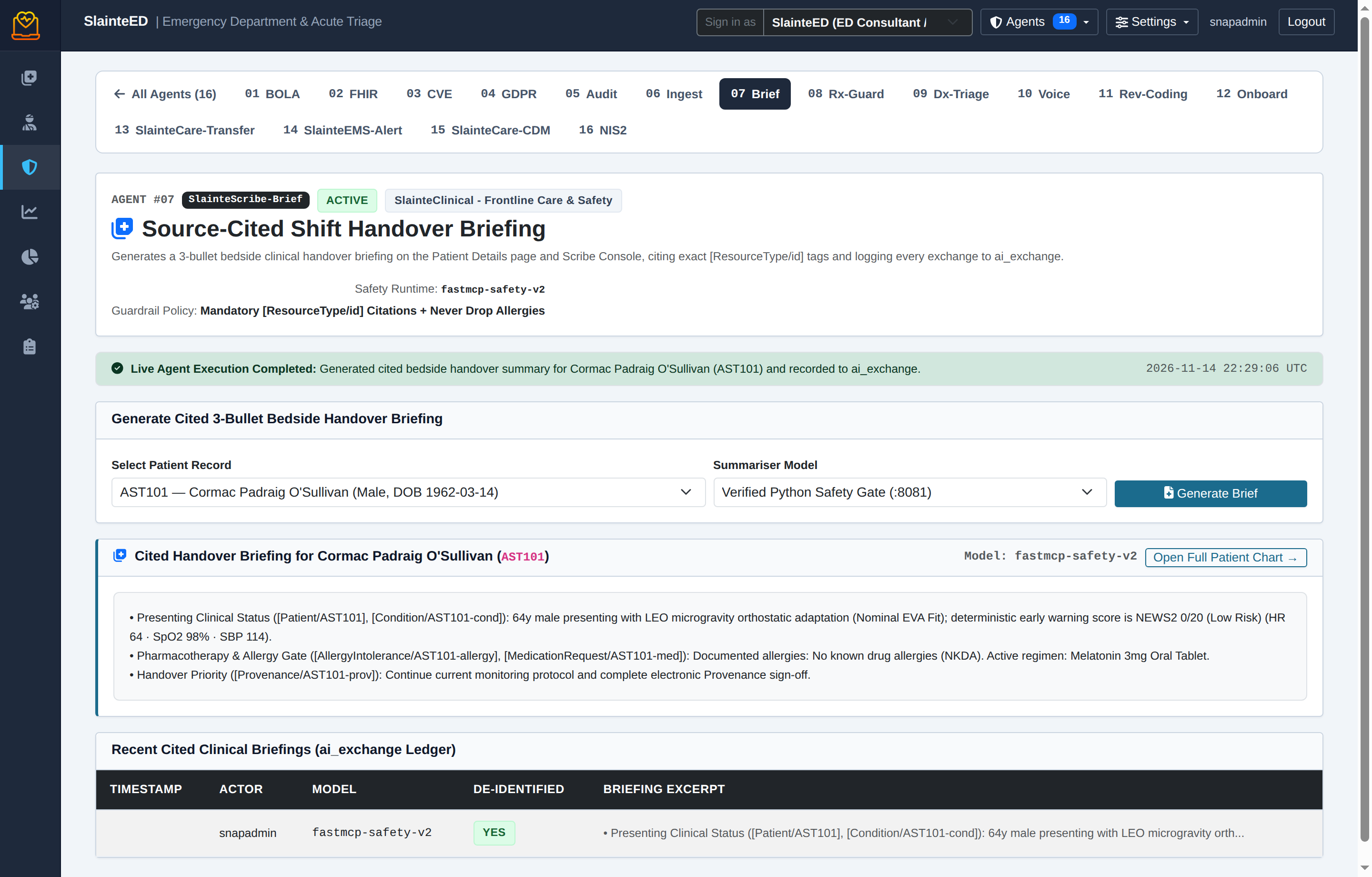
Source-Cited Shift Handover Briefing
Turns dense patient histories into a crisp 4-bullet shift handover where every point cites the exact underlying allergy, vital trend, or blood test record.
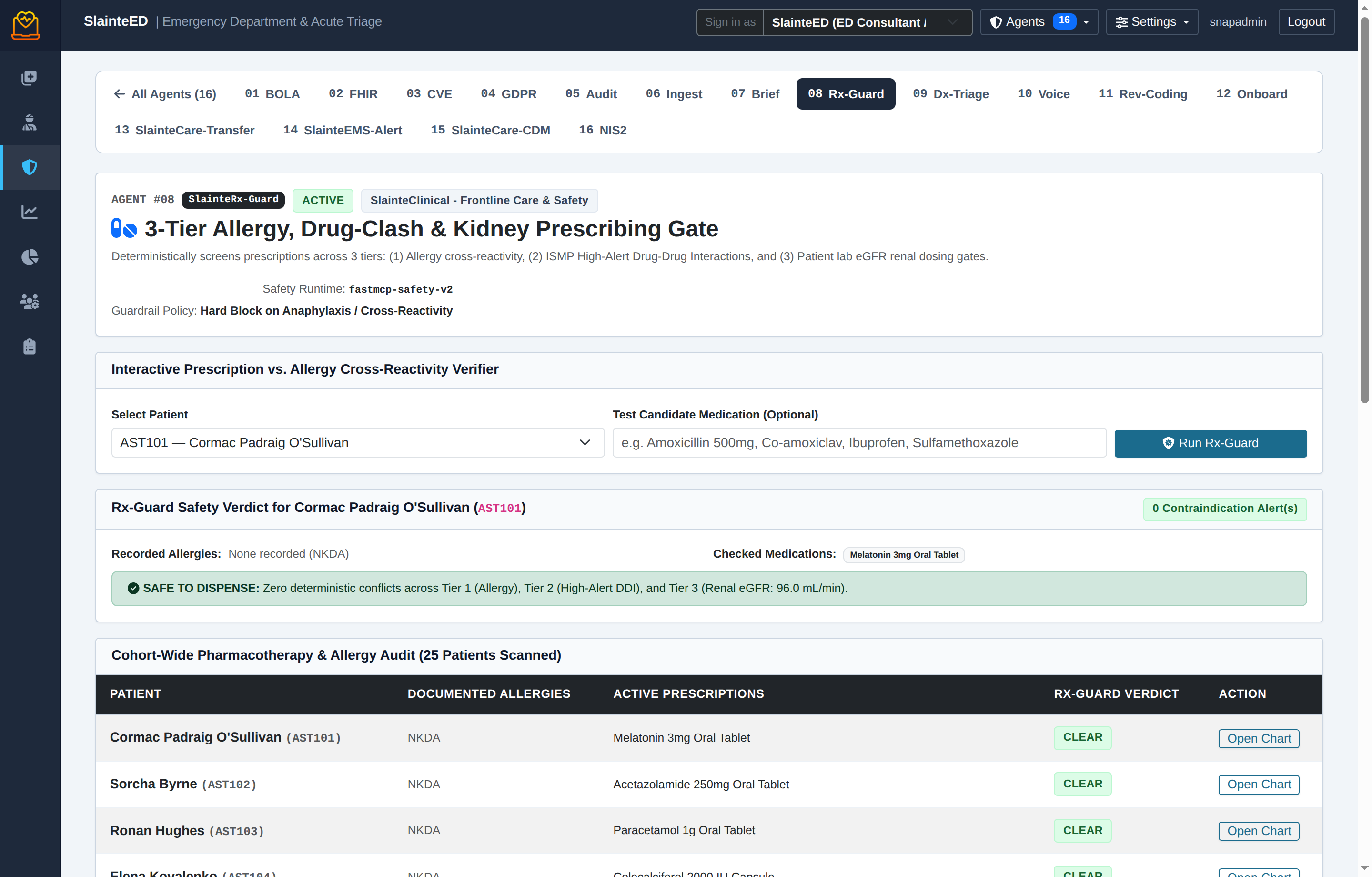
3-Tier Allergy, Drug-Clash & Kidney Prescribing Gate
Catches dangerous prescriptions in under 5ms by screening drug-family allergies, high-risk medicine clashes, and current kidney and potassium blood test results.
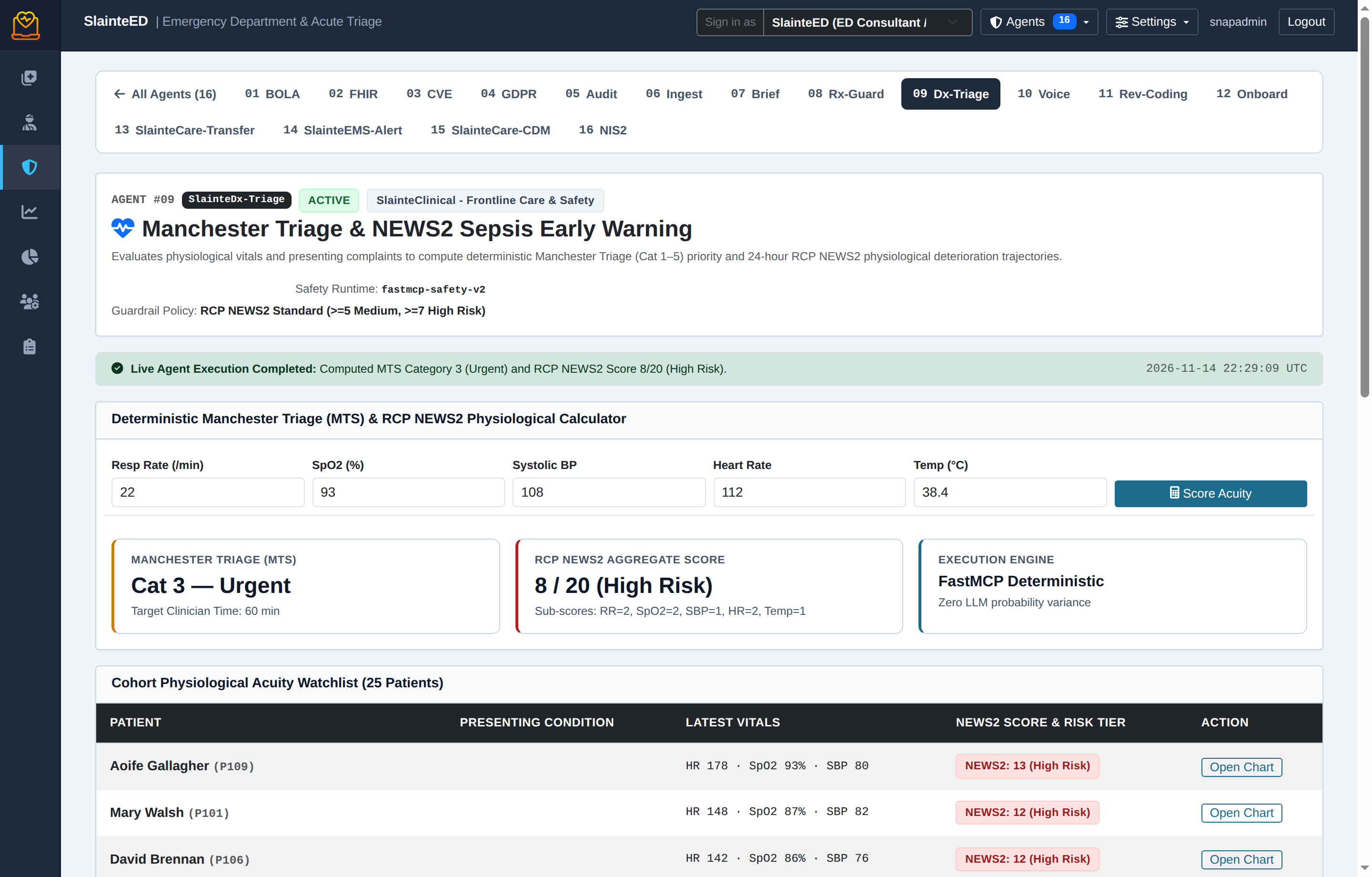
Manchester Triage & NEWS2 Sepsis Early Warning
Calculates official Manchester Triage urgency levels (Cat 1-5) and RCP NEWS2 sepsis warning scores in under 10ms using tested clinical math every time vitals update.
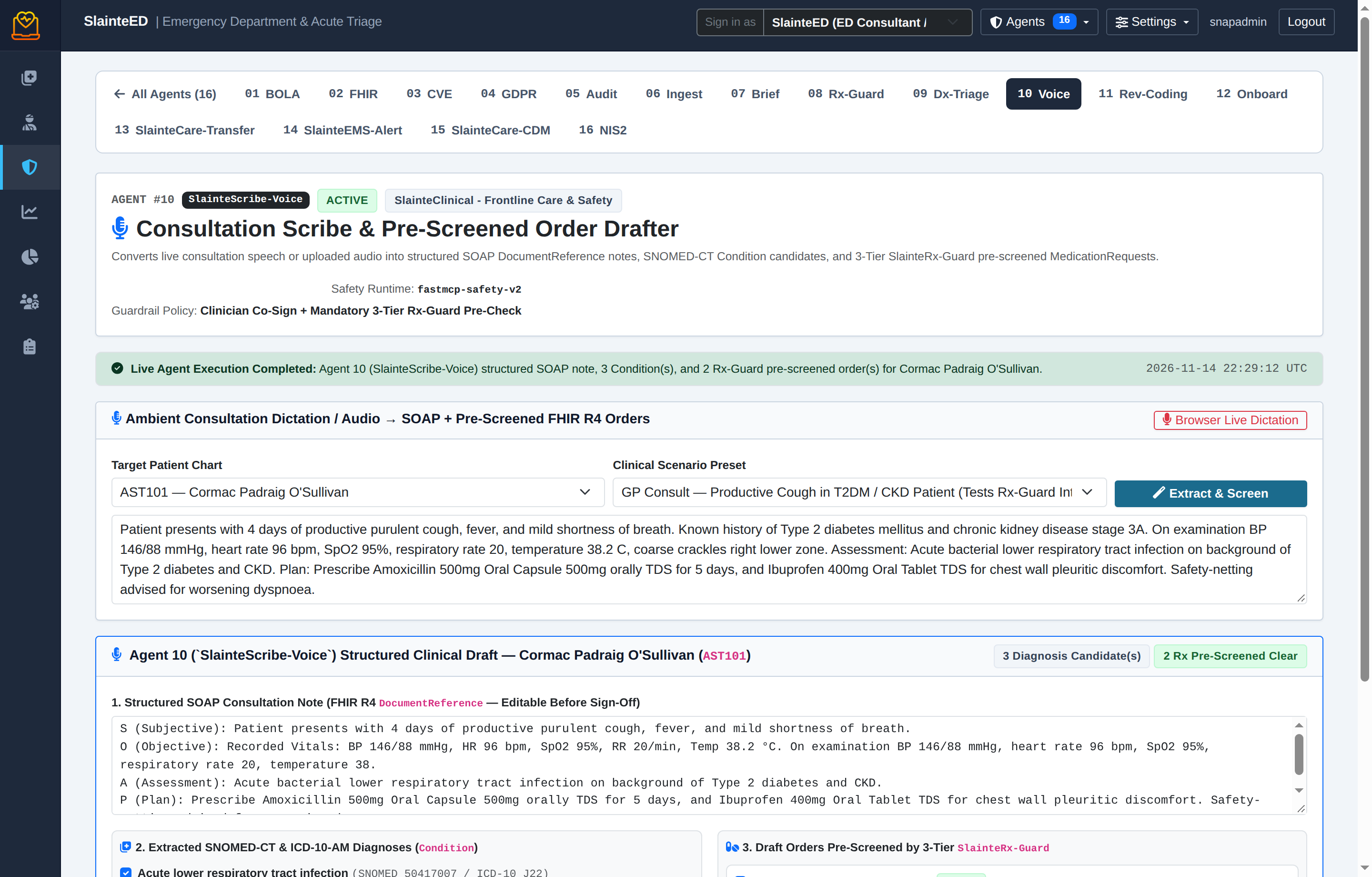
Consultation Scribe & Pre-Screened Order Drafter
Cuts evening typing by turning consultations into clean SOAP notes, coded diagnoses, and safety-screened draft prescriptions waiting for clinician approval.
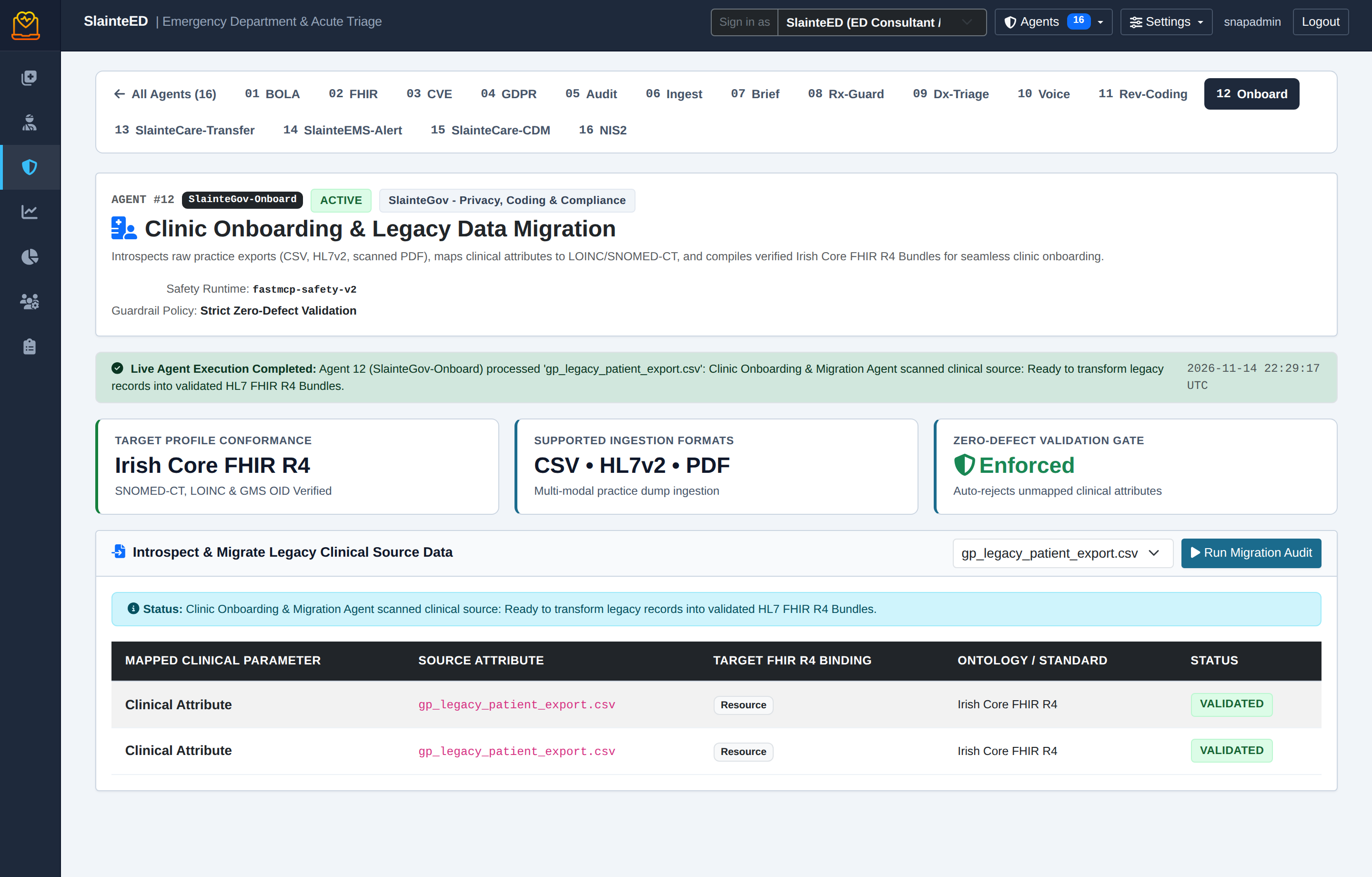
Clinic Onboarding & Legacy Data Migration
Turns messy spreadsheets, old clinic database exports, and scanned referral files into clean, standards-compliant HL7 FHIR R4 patient charts in hours.
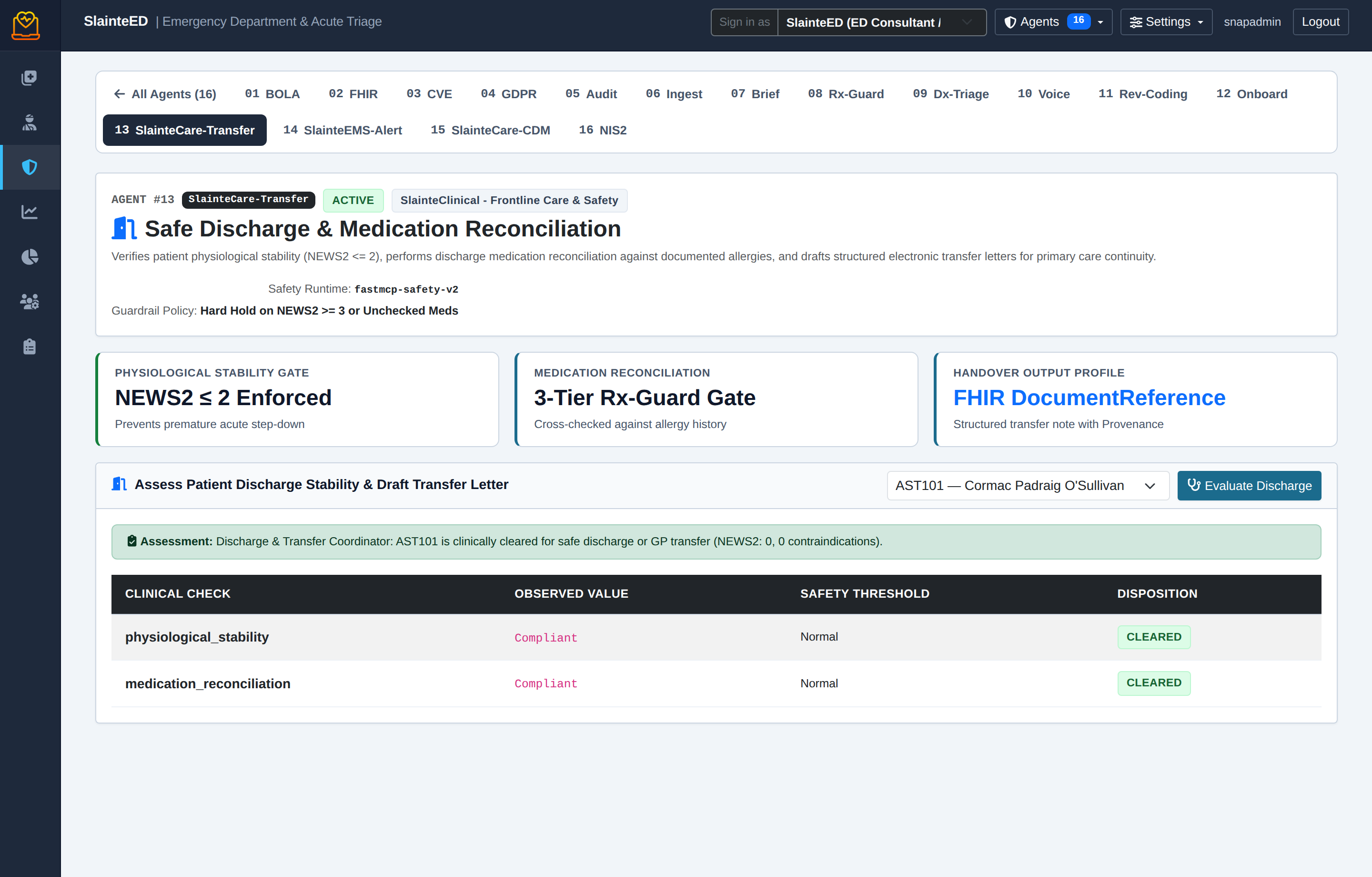
Safe Discharge & Medication Reconciliation
Verifies patient vital stability before ward discharge, checks every take-home prescription against allergies and kidney labs, and drafts clean GP transfer summaries.
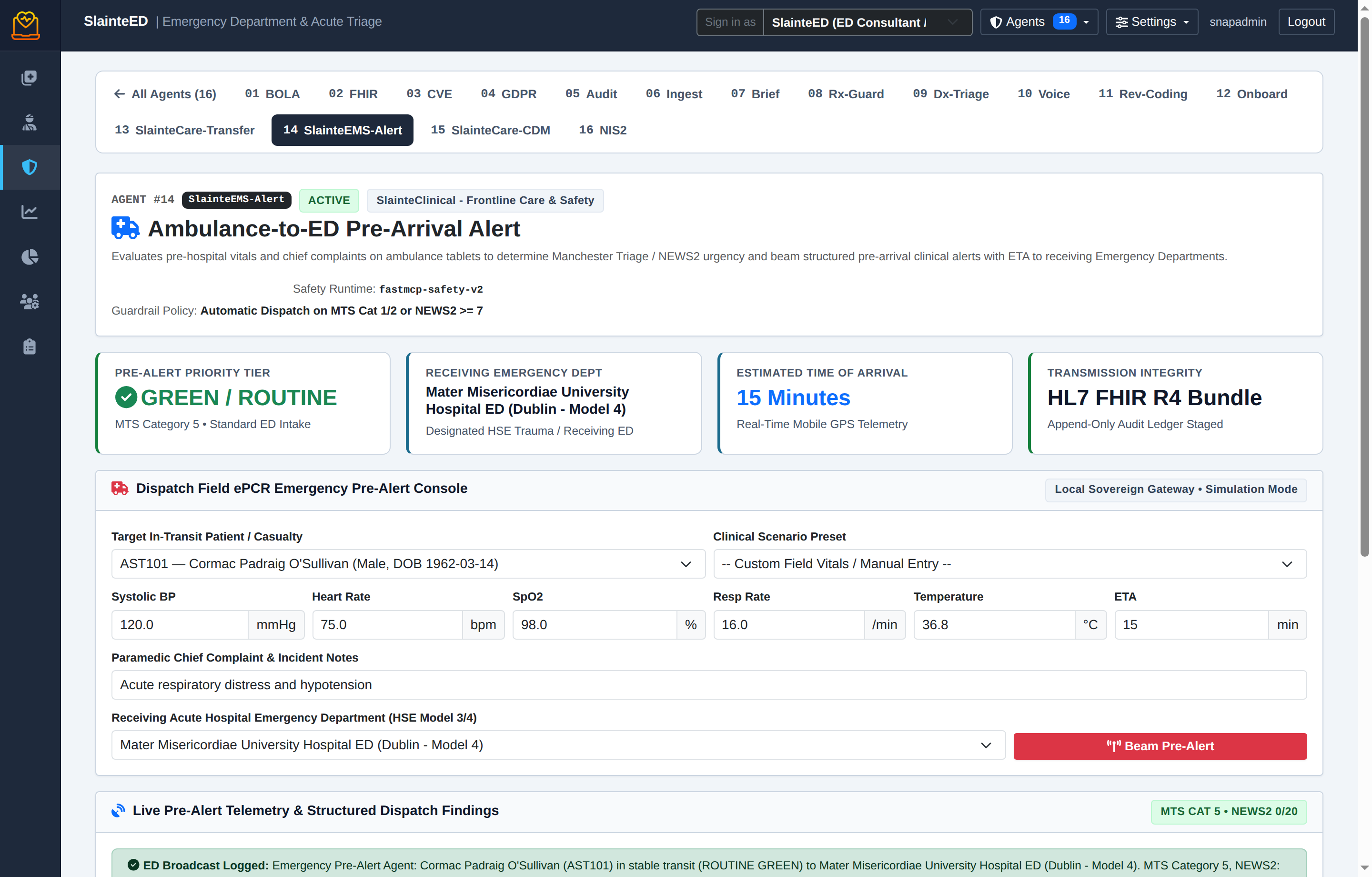
Ambulance-to-ED Pre-Arrival Alert
Calculates triage urgency from paramedic tablet vitals in milliseconds and beams structured pre-arrival alerts with ETA straight to receiving hospital ED bays.
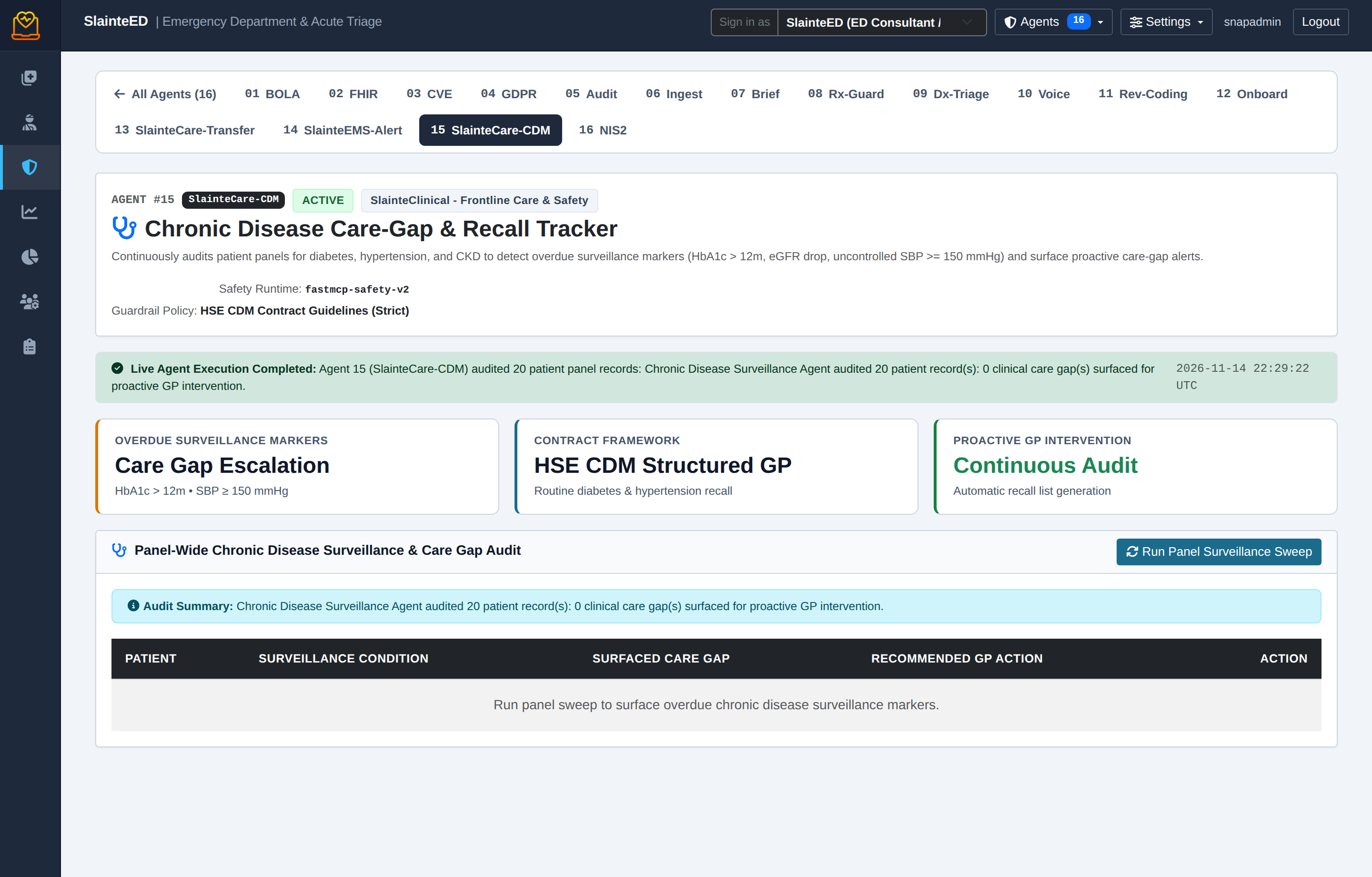
Chronic Disease Care-Gap & Recall Tracker
Sweeps GP and primary care patient rosters to highlight overdue diabetes, kidney, and blood pressure checks so nurses can book timely follow-ups effortlessly.
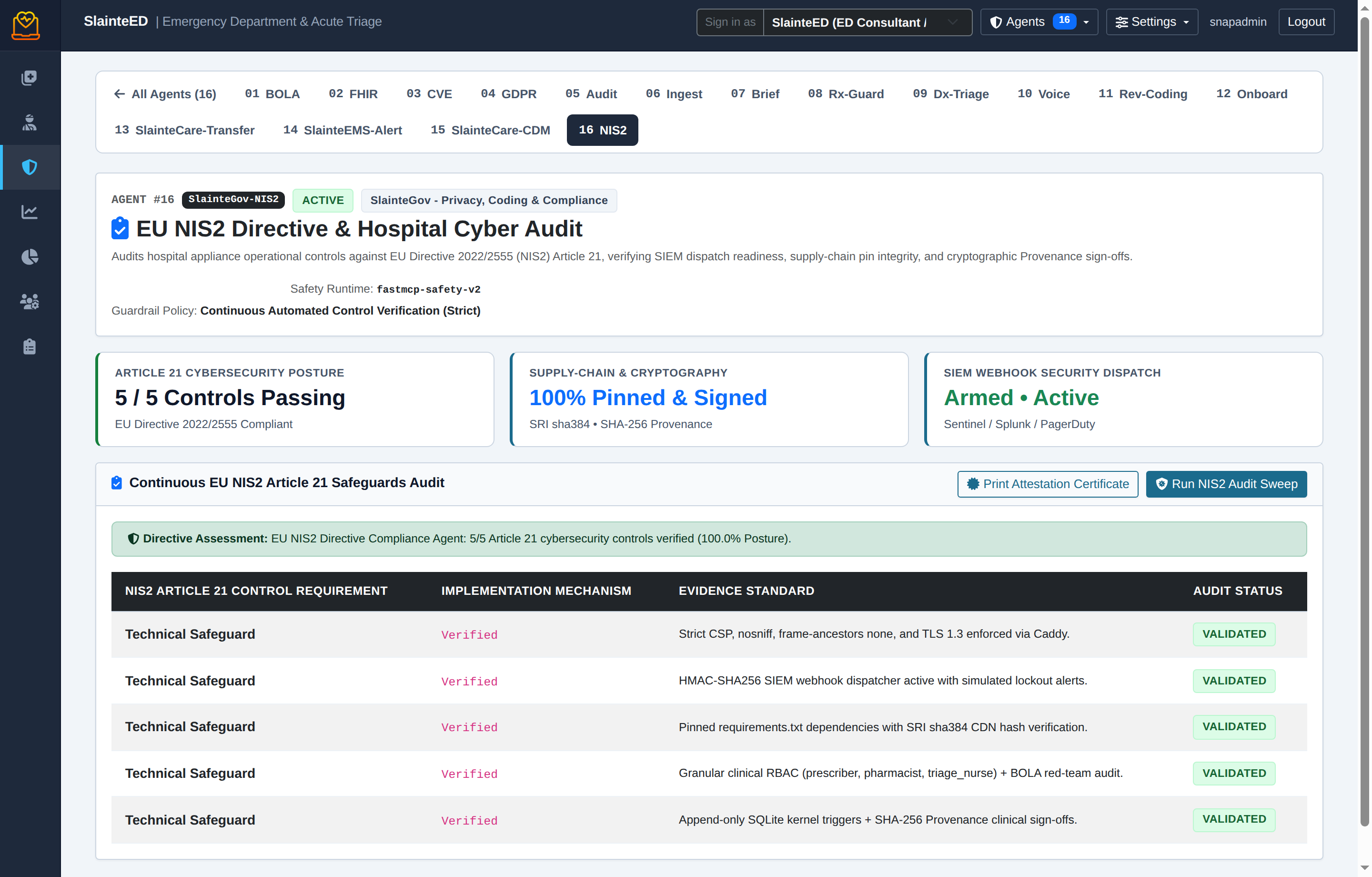
EU NIS2 Directive & Hospital Cyber Audit
Continuously tests hospital cybersecurity controls against EU NIS2 Article 21, verifying access locks, package pins, and security alerts, and prints audit-ready certificates.